Separation Anxiety at Drop-Off: Gentle Strategies Rooted in Comfort, Routine, and Trust
Quick Answer
Separation anxiety at drop-off is a normal, healthy part of early childhood development — and with the right routines, consistent caregivers, and a warm faith-centered environment, most children settle in more quickly than parents expect. At Guidance Preparatory Academy, our teachers and staff are trained to meet each child right where they are, making every morning a little gentler than the last.
When the Goodbyes Are Hard
Some mornings are hard. A child reaching back from the doorway with tears starting or holding a coat sleeve tight leaves parents feeling anxious on the commute.
Those mornings are one of the most common things families bring up when they first join our program, and they deserve an honest conversation grounded in safety, trust, and shared values.
If you have been looking for a faith-based preschool in Bartonville, Roanoke, and nearby communities, you have probably found a lot of general advice about separation anxiety. This post focuses specifically on what works inside a faith-centered early childhood environment — and how the routines, relationships, and values we hold carry children through those hard morning moments.
Why Separation Anxiety Happens — and Why It Is a Good Sign
Separation anxiety is a clear sign that your child has formed a secure, loving bond at home. When children cry at drop-off, they show how deeply family relationships matter; a foundation we honor and nurture at Guidance Preparatory Academy. Our teachers have years of experience and share the love of the Lord. They welcome your child with gentleness and patience, building a foundation of trust so your child feels safe.
Most children between ages one and four experience some degree of separation anxiety. According to the American Academy of Pediatrics, separation anxiety typically peaks between 10 and 18 months and can resurface during transitions — like starting a new school, returning after a break, or adjusting to a change in routine. Understanding that this is developmentally expected does not make the tears easier in the moment, but it does help families respond with patience rather than alarm.
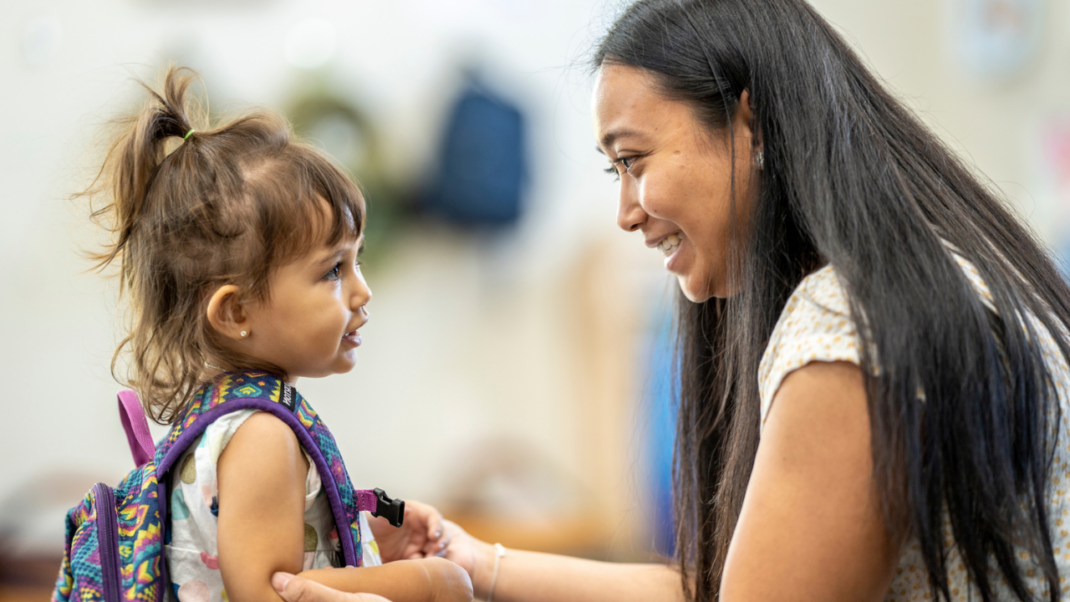
At Guidance Preparatory Academy, our staff expects this. Teachers are trained to welcome children who are still warming up, offer a calm presence, and build the kind of trust that helps children begin to feel safe without needing a parent right beside them.
The Power of a Consistent Good-Bye Routine
One of the most effective tools a family can have during this season is a short, predictable goodbye ritual. Children feel safer when they know exactly what is coming. A goodbye that is the same every single morning — a hug, a special phrase, a little prayer together before walking out — tells a child that even though the parent is leaving, the world is still ordered and good.
A few things that tend to help:
- Keep the goodbye brief. Longer goodbyes often increase distress rather than reducing it, because children sense when a parent is uncertain.
- Use the same words every time. Something as simple as “I love you, I’ll be back after snack” gives a child a concrete anchor.
- Try a short prayer at drop-off. Many families in our program find that a simple prayer — “God, please keep my child safe and happy today” — gives both parent and child a sense of peace and connection to something bigger than the moment.
When children begin to expect what comes next, their nervous systems settle more quickly. Predictability is one of the quieter gifts of a structured daily routine.
What the School Environment Can Do That Home Cannot Replicate
A warm, faith-centered classroom offers something uniquely powerful for children moving through separation anxiety: a community of consistent, caring adults who are not their parents, and who show up the same way every single day.
When children experience teachers who greet them by name, who know their favorite toy, who remember that they had a hard day last Tuesday — they begin to build what child development researchers call a “secondary attachment figure.” At Guidance Preparatory Academy, our teachers and staff share a genuine love for the children in their care, and that relationship becomes its own source of security over time.
Our classrooms are also structured with the whole child in mind — socially, emotionally, physically, intellectually, and spiritually. Morning circle time, consistent daily rhythms, and faith-based activities woven throughout the day all help children develop an internal sense of belonging. When a child knows what to expect from the room and the people in it, their confidence grows.
How Faith Shapes the Way We Respond to Hard Moments
At Guidance Preparatory Academy, we believe that the emotional life of a child is just as important as their academic readiness. When a child is struggling at drop-off, we do not rush past the feeling. We make room for it.
Teachers are guided by the values of gentleness, patience, and unconditional care. Comfort is not seen as indulgence — it is how trust is built. A child who learns that the adults around them will respond to distress with steadiness and kindness is developing one of the most important things faith can give them: the ability to trust something beyond themselves.
Over time, children begin to carry that trust into their daily experience at school. Many families tell us that within a few weeks of consistent drop-offs, their child began running ahead to the classroom door. That shift happens because the relationship is real, and the environment has earned their confidence.
Frequently Asked Questions
How long does separation anxiety at drop-off usually last?
For most children, the adjustment period is two to four weeks when the school routine is consistent and the environment is warm and stable. Some children move through it in days; others take a little longer. Keeping the goodbye brief and predictable each morning is one of the most reliable ways to shorten the adjustment window.
Should I stay longer at drop-off if my child is crying?
It can feel loving to stay, and sometimes a few extra minutes genuinely help a child settle. What research and experienced educators both suggest, though, is that the most comforting thing a parent can do is keep the goodbye confident and consistent. Children read body language closely — when a parent seems certain that school is a safe place, a child begins to believe it too.
What if my child is still struggling after several weeks?
If drop-off is consistently difficult after three to four weeks of regular attendance, it is worth a conversation with the child’s teacher. There may be something specific in the environment or schedule that can be adjusted, or a child may simply need a small transition support — like bringing a familiar comfort object from home. Our staff is here to problem-solve with every family.
How does faith-based education specifically help with separation anxiety?
A faith-centered classroom brings a layer of routine and meaning that goes beyond academic structure. Morning prayers, songs, and consistent expressions of love and care help children feel held by something steady and good. Many children find comfort in the familiar language of faith they hear both at home and at school — it connects the two worlds rather than separating them.
What can families do at home to help children feel ready for drop-off?
Talking about school warmly during the evening or at dinner makes a difference. Reading books about going to school, letting a child pick out something small for their backpack, and practicing the goodbye ritual a few times before drop-off day can all help ease the transition. Children who hear consistent, positive messages about school from their family tend to settle into the environment more easily — their classroom becomes an extension of what they already trust.
What Gentle Goodbyes Teach Our Children in
Separation anxiety is not a problem to solve quickly. It is a season to move through gently, with the right support on both sides of the door. The mornings get easier — and when they do, it is because a child has built something real: a sense of trust that carries them through the day.
Families in Bartonville, Roanoke, and nearby communities choose Guidance Preparatory Academy because they want their child to grow up in a place where faith, warmth, and consistency are woven into every part of the day. We would love to show you what that looks like in person.
Come see our community for yourself. Schedule a tour at Guidance Preparatory Academy and meet the teachers who will be there for every child — and every family — on those hard mornings.
Related Posts
All Posts
Raising Kind Kids: Simple Acts of Service for Faith-Filled Families This Summer